Crypto Training
Foundry for Security: Fuzzing, Invariants, and the Cheatcodes That Matter
Foundry turns security ideas into executable checks. Fuzz what you fear, encode invariants, and keep exploit tests as regression armor.
 Crypto Training•2026-02-05•2 min read
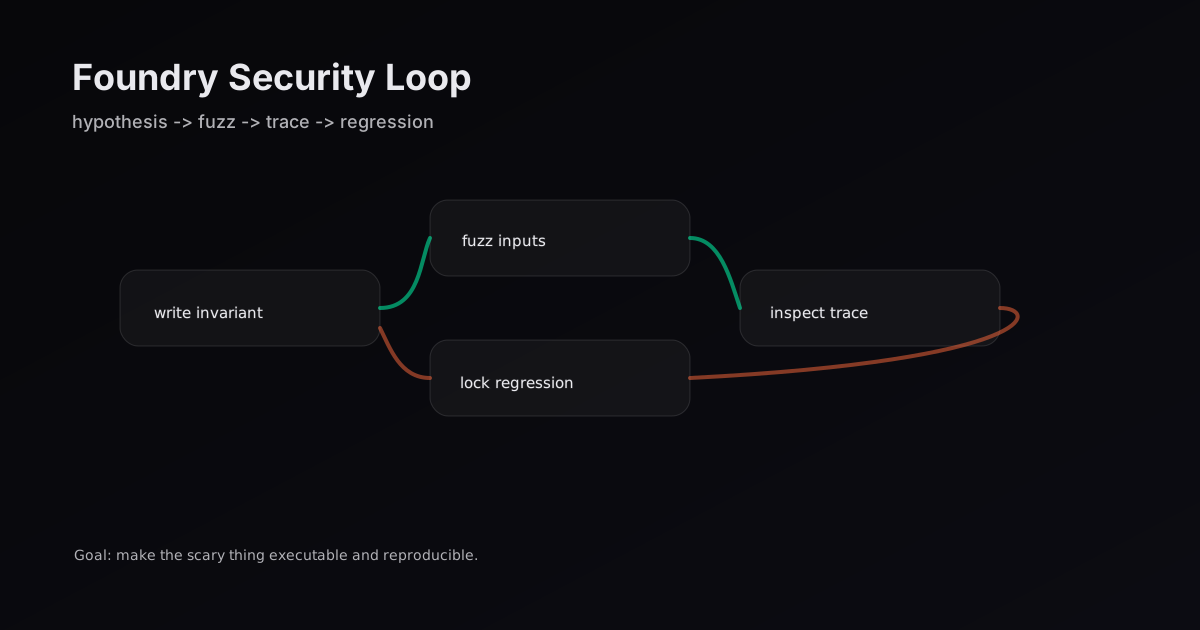
Reading code finds bugs. Executable security checks keep them dead.
Foundry is great for this because the loop is fast:
- write a harness
- fuzz inputs
- inspect traces
- lock a regression
A small example: delta-based ERC-20 receive#
Let’s say your protocol integrates “ERC-20” tokens. You don’t assume transfers are pure.
You can encode that as a property:
function test_receive_is_delta_based(uint256 amount) public {
    amount = bound(amount, 1, 1e24);

    uint256 beforeBal = token.balanceOf(address(vault));
    token.mint(address(this), amount);
    token.approve(address(vault), amount);

    vault.deposit(amount);

    uint256 afterBal = token.balanceOf(address(vault));
    assertGt(afterBal - beforeBal, 0);
}
This isn’t about token minting being realistic. It’s about capturing the invariant you want: credit is based on what arrived.
Invariants: say what must always be true#
When I write invariants, I aim for relationships, not examples.
Here’s a table that helps:
| System | Useful invariants |
|---|---|
| Vault | shares represent claim on assets; no negative balances |
| Lending | collateralization bounds; liquidations reduce bad debt |
| AMM | reserves never go negative; fees monotonic |
| Bridge | message ids consumed exactly once; domain separated |
Cheatcodes I actually use in audits#
I’m not going to list all cheatcodes. The useful ones for security work are:
vm.prank/vm.startPrankto model callersvm.warp/vm.rollfor time and block logicvm.expectRevertto pin down failure modesvm.assumeto constrain fuzz domains
The goal is to force your mental model into code.
Watch: fuzzing and invariants in Foundry#
If you want a fast mental model for why fuzzing and invariants catch real bugs (and how to structure them), this talk is worth the time.
The audit move that pays off#
When you find a bug:
- Write a failing test that exploits it.
- Patch.
- Keep the test forever.
That’s how audits keep compounding.
Further reading#
- Foundry cheatcodes reference: https://book.getfoundry.sh/cheatcodes/